
For Teachers
For Teachers
Camera-motion math built for busy classrooms.
Turn a tablet or phone into an active math station. Students practice by jumping, reaching, comparing, and responding with their bodies while teachers keep the lesson moving.
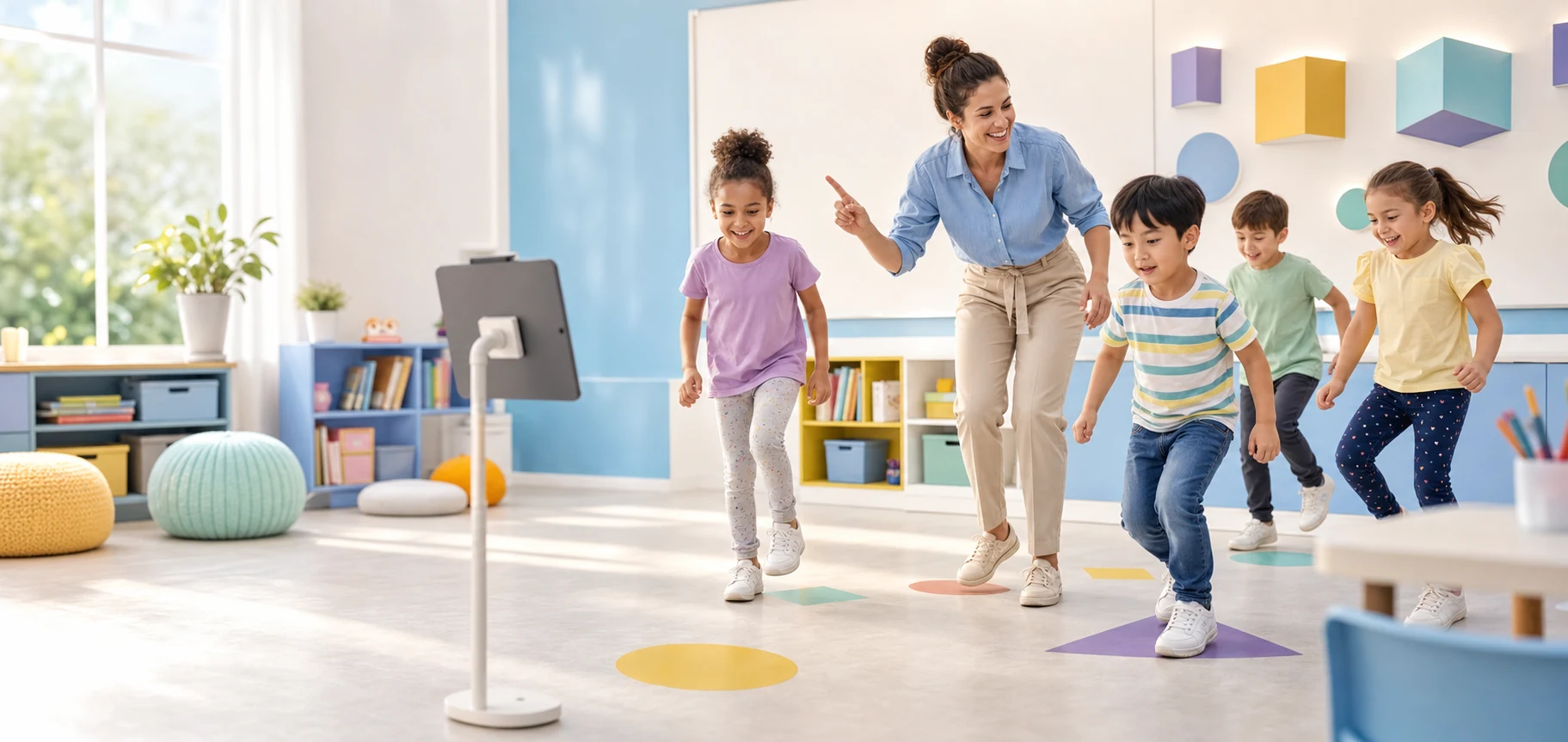
Place the device, choose a skill, and let students rotate through active practice.
Route 02Support movement learnersGive kinesthetic learners a practical way to feel number sense and fluency.
Route 03Pilot with one classStart with a controlled pilot before scaling across a grade or school.
Designed for the school day
More energy than a worksheet. Less friction than a lab.
Active Minds gives teachers a new classroom mode: active, short, guided, and easy to run with ordinary devices.
Try Hoppy Math before your school pilot.
Install it on a classroom tablet or phone and test one short active math station with your students.
In the room
Students see math as something they can move through.
Use the device as a station: one group moves, responds, and builds fluency while the rest of the class continues the lesson, rotation, or support block.

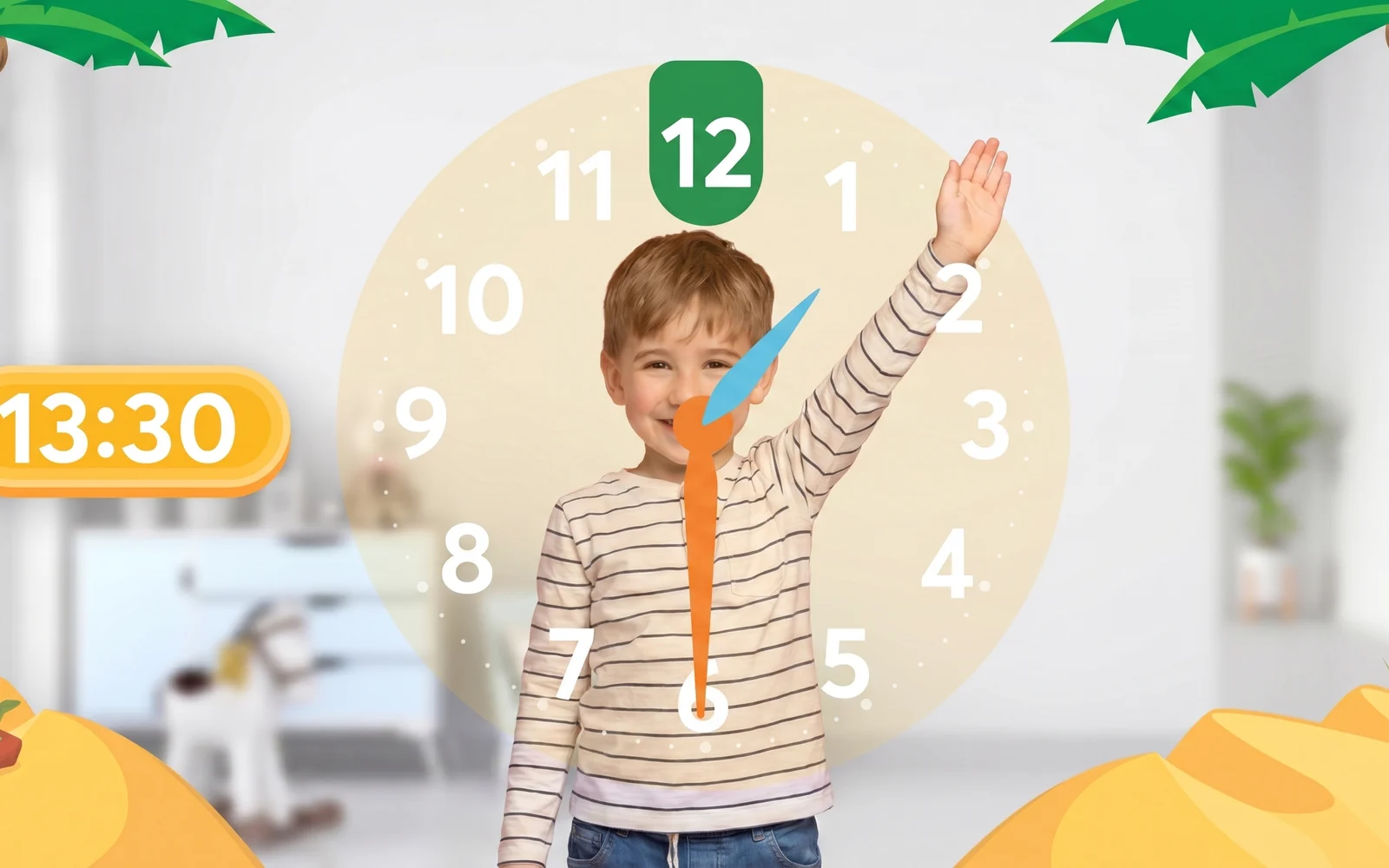
Made for quick starts
No cart of equipment. No wearable pairing. Students can begin with a clear camera view and a safe movement space.
Keeps math physical
Students compare, count, and solve by moving, helping abstract ideas become more concrete.
Fits class routines
Use it for warm-ups, center rotations, intervention blocks, enrichment, or active breaks.
Easy to explain
Parents and admins instantly understand the value: math practice that gets children on their feet.
The classroom gap
Kids need movement, but teachers need control.
! The usual problem
- Digital practice often keeps students seated and tapping.
- Movement activities can be hard to measure or repeat.
- New classroom hardware creates setup and management friction.
✓ Active Minds answer
- Math practice becomes camera-based movement, not passive screen time.
- Activities are short enough for rotation and structured enough for class use.
- Ordinary phones or tablets keep pilots light and realistic.
Classroom flow
Three steps from setup to active practice.
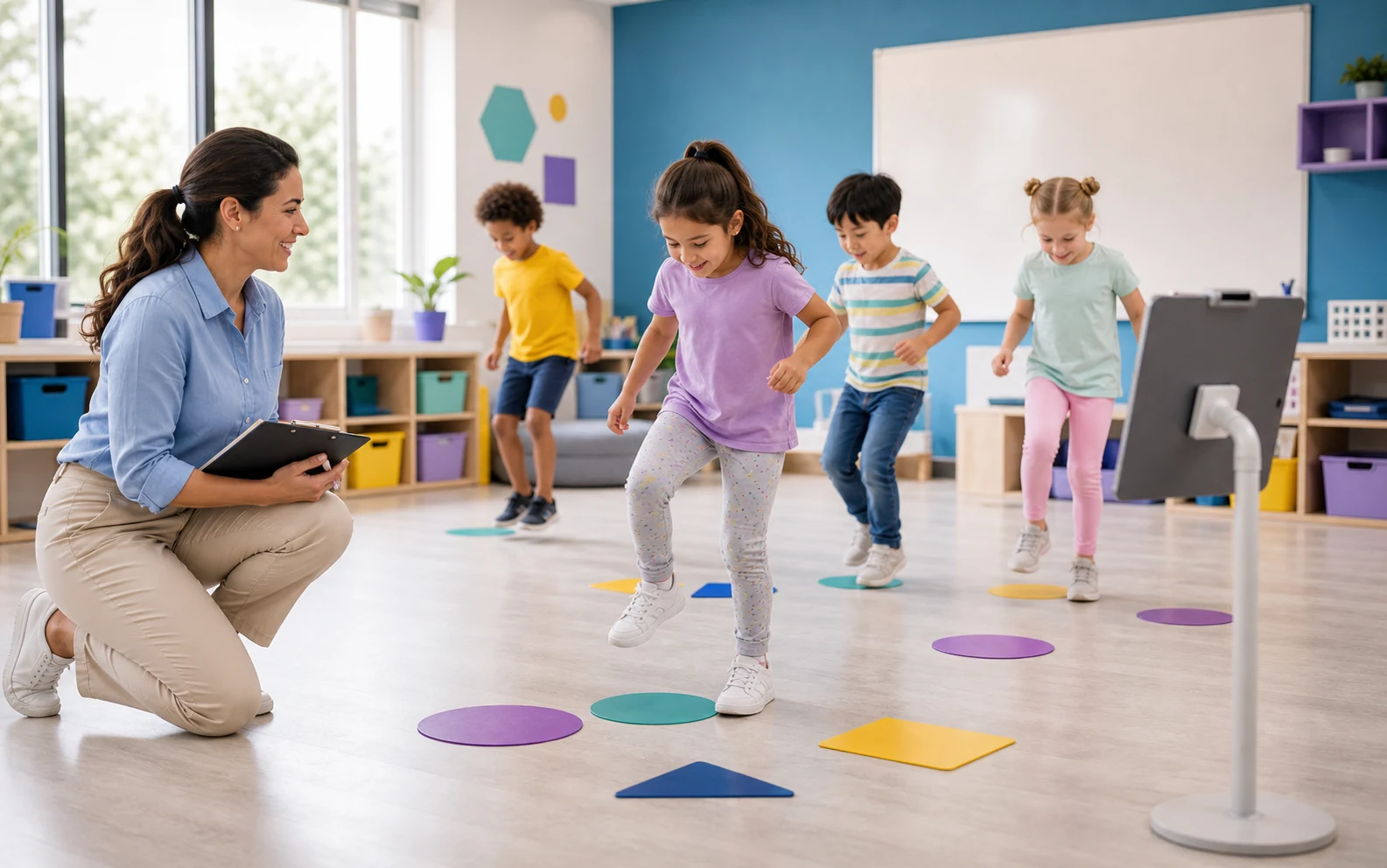
Place a tablet or phone on a stand where the student can be seen clearly.
Pick a skill for the lesson, station, intervention goal, or practice block.
Children jump, reach, compare, and respond while the teacher keeps the room moving.
Pilot ready
See the classroom fit before scaling.
Run a short pilot with existing devices, observe how students respond, and decide where Active Minds belongs in your school day.
Where it fits
- Morning math warm-ups that raise attention before instruction.
- Center rotations with independent or paired practice.
- Support sessions for confidence, fluency, and repetition.
- After-school clubs and school pilots for active learning.
What schools can test
- How movement affects engagement in early math practice.
- How quickly teachers can run an active station.
- How students respond to camera-based embodied learning.
- How the product fits existing devices and classroom routines.
Ready for a quick classroom test?
Download the app, run one movement-based math session, then talk to us about a school pilot.
FAQ
Teacher questions, answered.
Does this replace math instruction?
No. It strengthens practice, fluency, engagement, and confidence around the lesson goals teachers already teach.
Can it work in a small classroom?
Yes. Activities are designed for controlled movement in a visible space, not running around the room.
Do students need accounts?
Pilot setup can be kept simple. The best account structure depends on the school’s rollout plan and privacy requirements.
Ready to pilot active math?
Start with one classroom flow, download Hoppy Math, and see how students respond when math moves with them.