The Science of Movement-Based Learning: Why Kids Remember More When They Move
Ask a child to sit perfectly still and memorize a list of facts, and you are working against their biology. Ask the same child to jump, build, clap or count steps while learning, and something different happens: the lesson sticks. That is the promise of movement-based learning — and it is not a trend, it is how young brains are wired to work.
In this article we unpack why movement helps children remember more, what the research actually says, and how you can use it at home this week without buying anything new. (If you are new to the topic, start with our parent’s guide to kinesthetic learning — this post digs into the science behind it.)
What is movement-based learning?
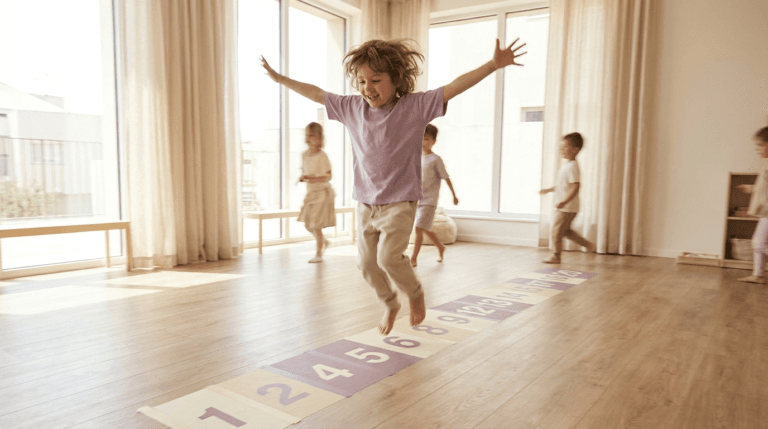
Movement-based learning means using the body as part of the lesson itself — not as a break from it. Instead of movement being the reward after the worksheet, the movement is the worksheet: hopping along a number line, forming letters with the whole arm, acting out a story, or jumping to the right answer.
It is closely related to kinesthetic learning, the learning style of children who understand best by doing and touching. The difference is scope: kinesthetic learning describes the child; movement-based learning describes the method — and the method helps almost every child, not only the obviously wiggly ones.
What happens in the brain when kids move
When a child moves, the brain does not switch off the “learning circuits” to run the body — the two systems work together. Researchers call this embodied cognition: the idea that thinking is not sealed inside the head but distributed across body and senses. A number traced with a finger, stepped along a mat and said out loud is encoded through several channels at once — motor, spatial, visual and verbal — which gives memory more hooks to hang on.
Physical activity also changes the brain’s chemistry in the moment. Movement increases blood flow and alertness, and exercise is associated with the release of factors that support attention and the growth of new connections. In plain terms: a child who has just moved is more awake, more focused, and more ready to encode what comes next.
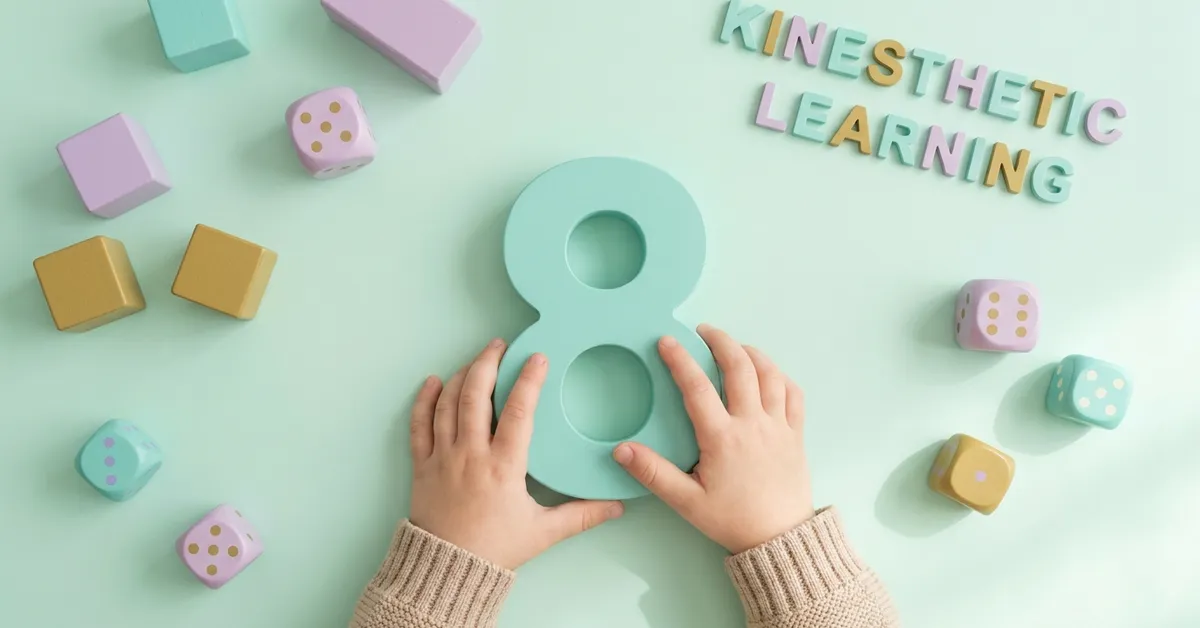
What the research consistently shows
Across classroom studies and reviews, a few findings come up again and again:
- Physically active lessons improve engagement. When academic content is woven into movement, children stay on task longer than in seated-only lessons.
- Memory benefits from “enactment”. Information that children act out or perform is recalled better than information they only hear or read — a robust effect psychologists have documented for decades.
- Activity breaks do not cost learning time. Short bursts of movement during the school day tend to improve, not hurt, academic performance — sitting longer does not equal learning more.
- The effect is strongest in young children. Preschool and primary-age kids, whose self-regulation is still developing, gain the most from lessons that let them move.
None of this means movement is magic on its own. The movement has to be connected to the content — jumping to the answer of 3 + 4 teaches math; jumping randomly just burns energy. That link between action and idea is where the learning happens.
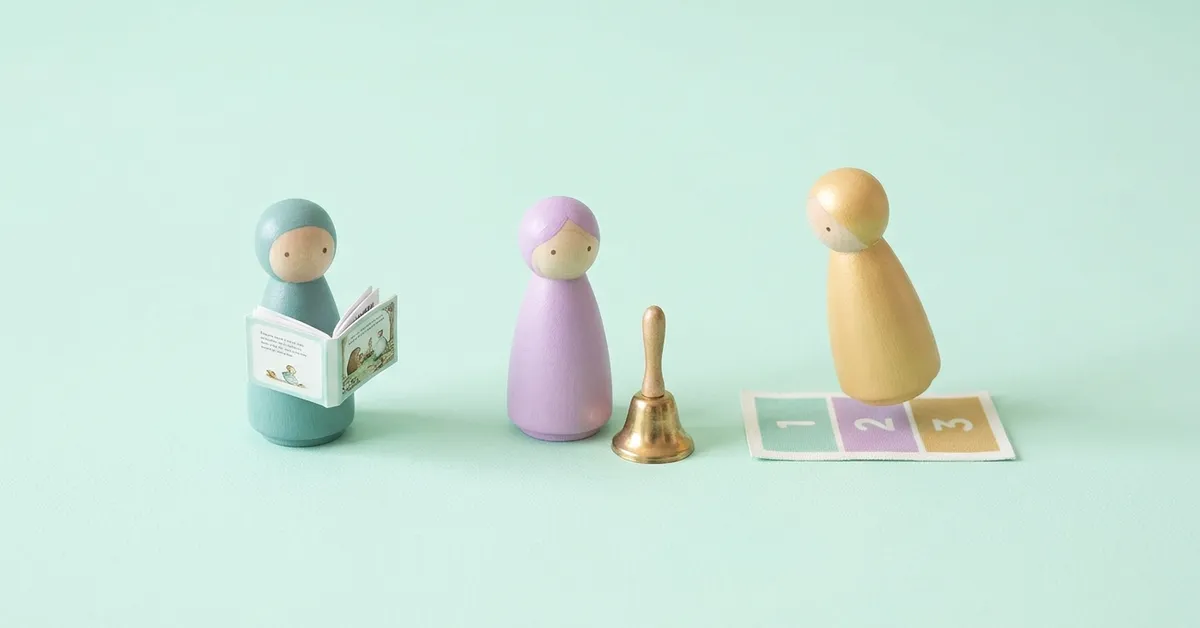
Why “sit still and focus” often backfires
For many children — especially under age ten — stillness is itself a task that consumes effort. A child spending most of their mental energy on not wiggling has little left over for the lesson. Movement-based learning flips that equation: it lets the body do what it wants to do anyway, and recruits that energy for the content.
This is also why movement helps children who seem “distracted”. Often the problem is not attention itself but the format. The same child who melts down over ten minutes of flashcards can happily practice the same facts for twenty minutes when the practice is a game played on their feet. We cover this in depth in our guide to kinesthetic learning activities kids actually love.
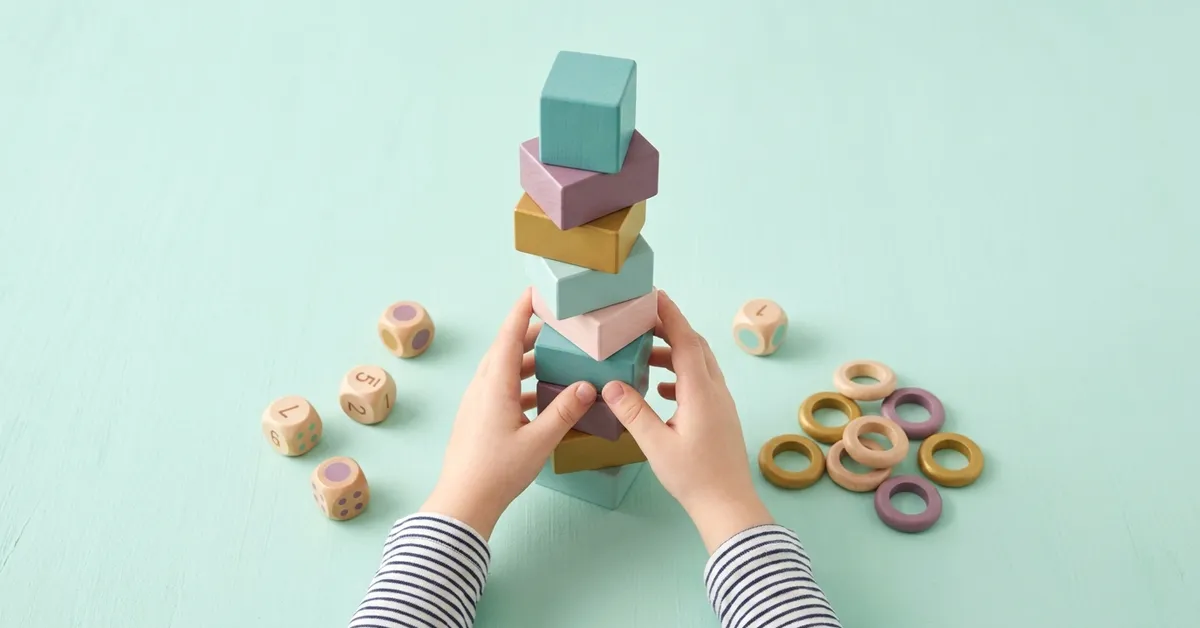
How to use movement-based learning at home
You do not need equipment or training — you need floor space and a little playfulness:
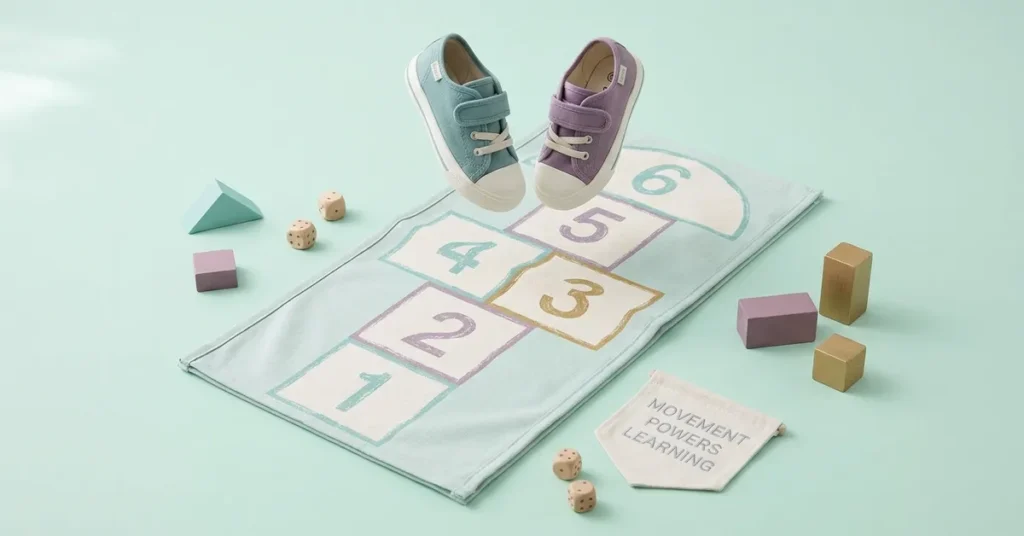
- Put answers on the floor. Write numbers or letters on paper, scatter them, and call out questions. The answer is wherever your child jumps.
- Trace it big before writing it small. New letters and numbers go arm-sized in the air or on a wall before pencil-sized on paper.
- Count with steps, claps and stairs. Skip-counting up the staircase beats chanting at the table.
- Act out word problems. “You have 5 apples and give away 2” becomes a mini drama with real objects.
- Keep sessions short and end on a win. Ten focused, happy minutes beat forty grinding ones.
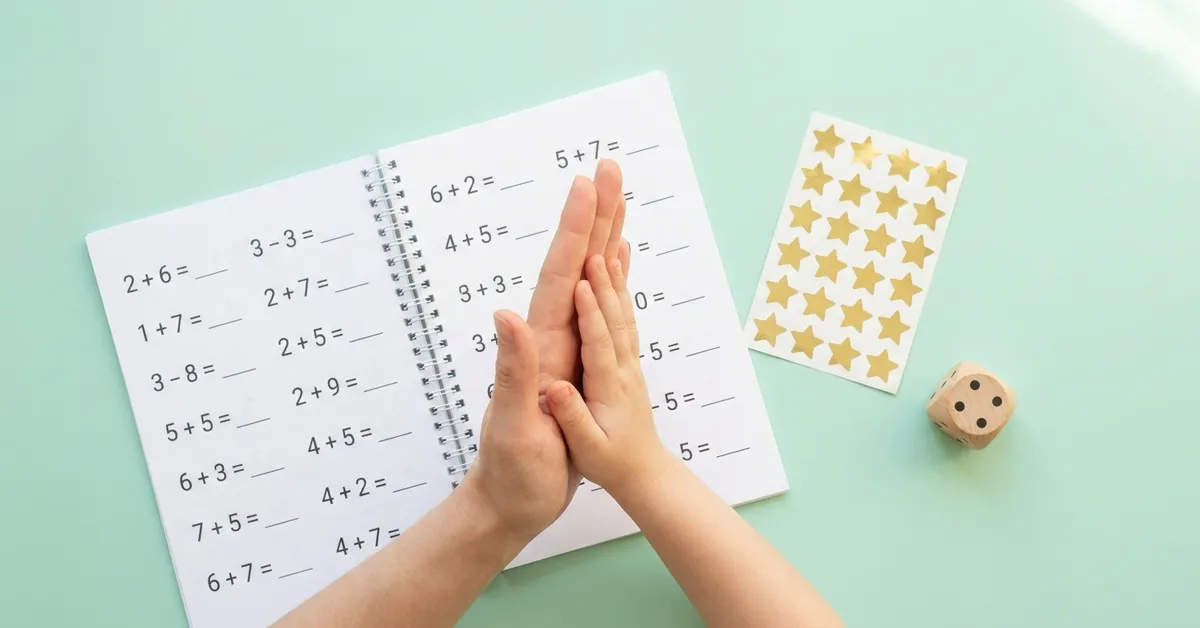
What about screens?
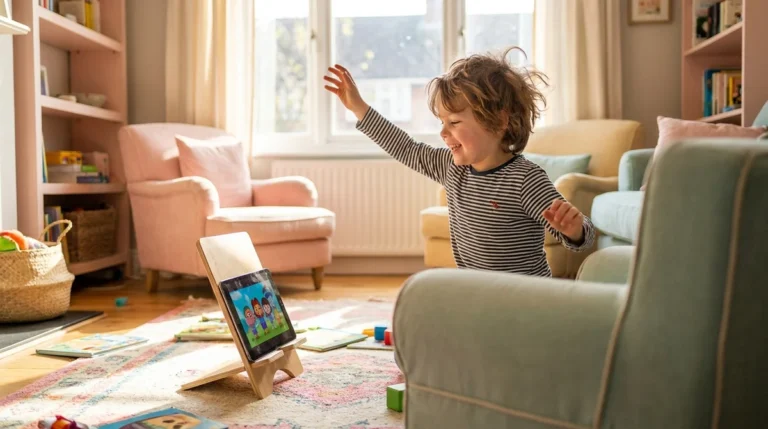
Screens are not automatically the enemy of movement — passive screens are. A video a child watches motionless is passive input; an app that asks the child to get up, jump and move to answer turns the screen into a coach for movement-based learning. That distinction — passive versus active screen time — matters more than minutes on the clock.
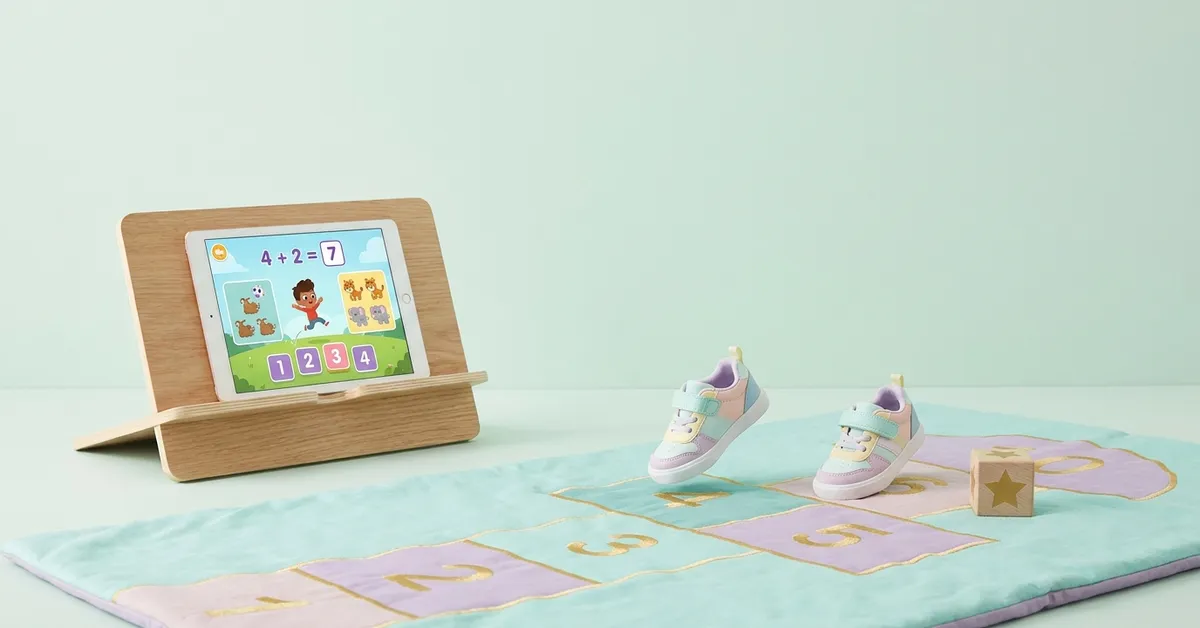
This is exactly the gap Active Minds builds for: our game Hoppy Math turns math practice into a physical game, so the screen gets your child moving instead of slumping.
Frequently Asked Questions
Is movement-based learning only for kinesthetic learners?
No. Kinesthetic learners benefit the most visibly, but multi-channel encoding helps nearly all children. Movement adds a memory pathway; it does not replace the others.
Does it work for older kids too?
Yes, though the form changes — building, experiments, role-play and walking discussions replace hopping games. The principle (body involved, brain engaged) stays the same.
How much movement is enough?
Even a few minutes woven into practice makes a difference. Think frequency over duration: short active bursts most days beat one long session a week.
Let the lesson move
Children remember what they do far better than what they are told. Put the body back into the lesson and you are not adding a gimmick — you are restoring the way kids learned everything from walking to talking.
Want the easiest way to try movement-based learning today? Download Hoppy Math and turn your child’s next math practice into a jumping game.