15 Kinesthetic Learning Activities Kids Actually Love
Knowing your child learns by doing is one thing — having a ready list of things to do is another. These kinesthetic learning activities need almost no equipment, work at home or in the classroom, and turn restless energy into real learning. They’re organized by skill, with age notes so you can adapt each one.
If you’re new to the concept, start with our overview of kinesthetic learning — then come back and pick an activity to try today.
Counting & number sense
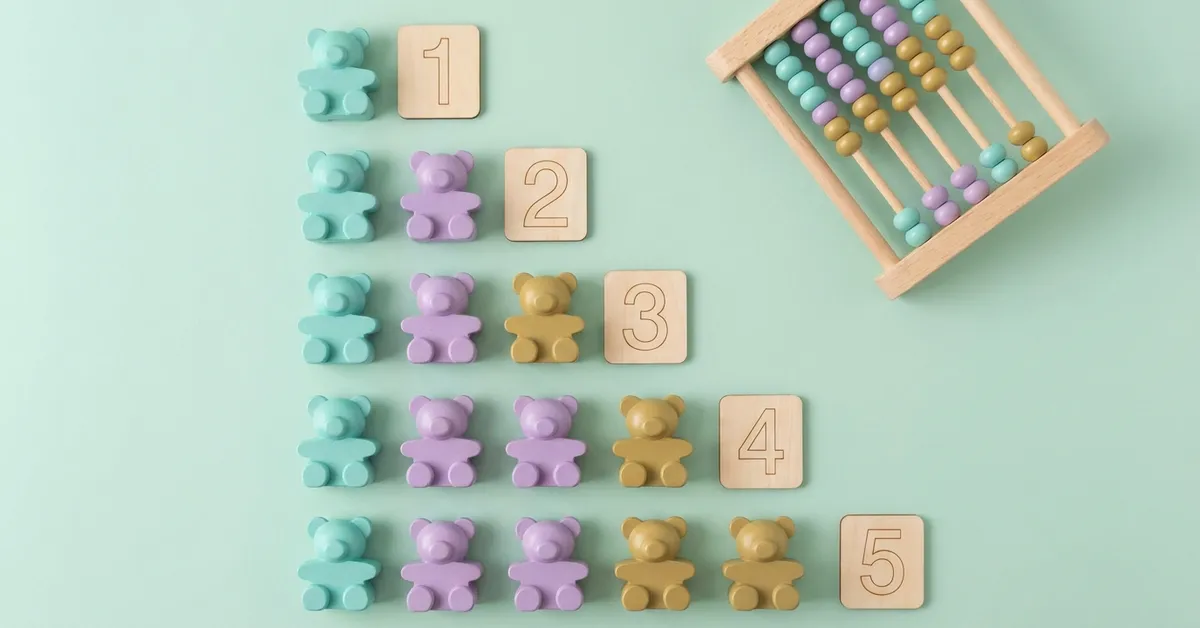
- Jump-and-count. Call a number; your child jumps that many times, counting aloud. (Ages 3–6. Add “count backwards” for a challenge.)
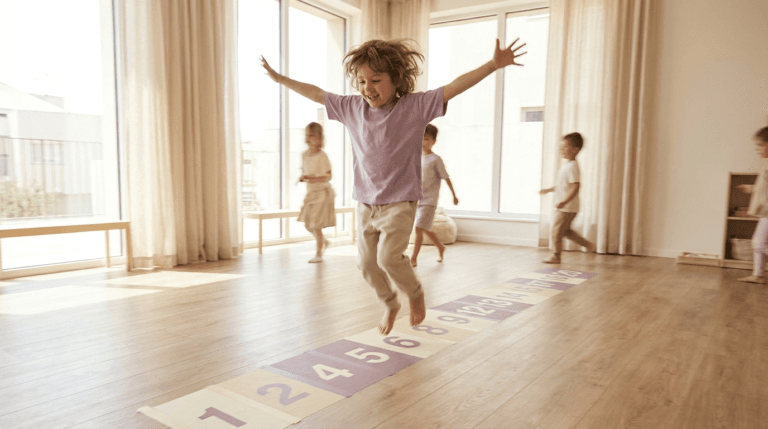
- Floor number line. Tape numbers 0–20 on the floor. Ask “5 + 3?” — your child hops to 5, then takes three hops forward to land on 8. Addition becomes physical. (Ages 5–8.)
- Number hunt. Hide number cards around the room; your child finds them and arranges them in order. (Ages 3–6.)
- Body counting. “Show me 7” — fingers, claps, stomps, or toy blocks fetched from across the room. (Ages 3–5.)
Math operations
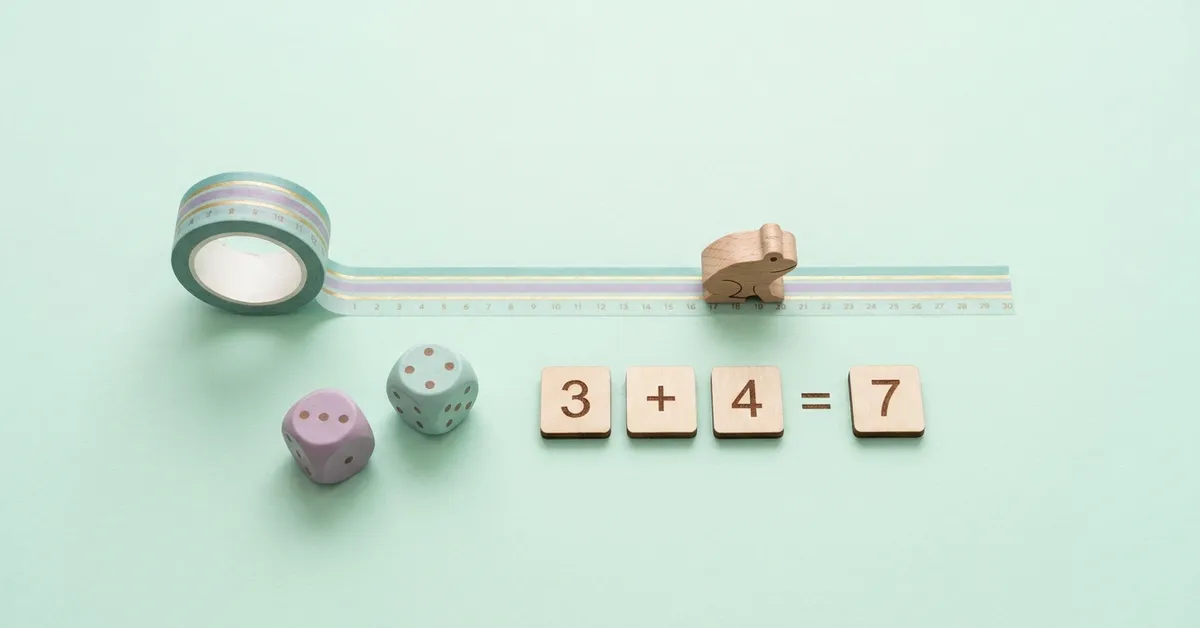
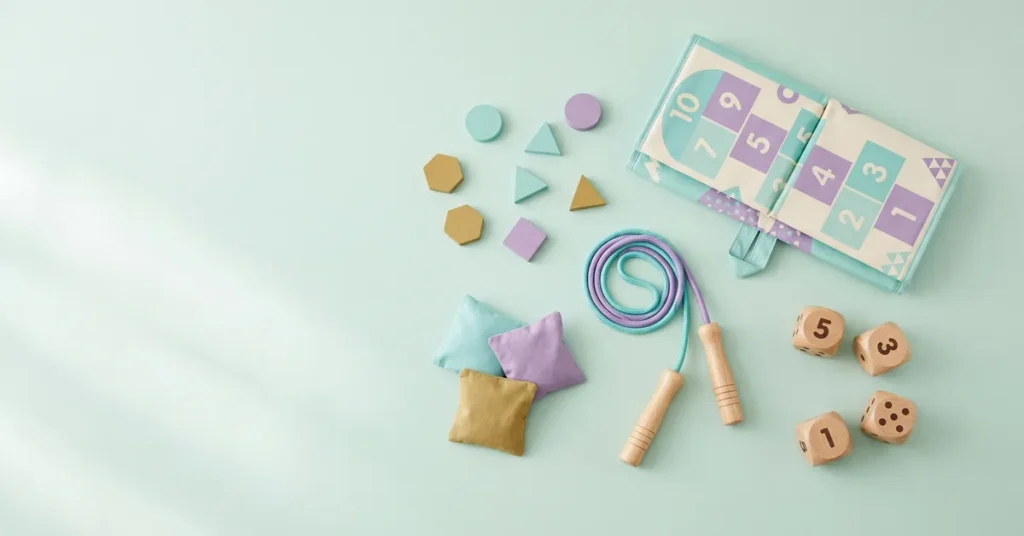
- Dice race. Roll two dice; first to shout the sum wins the point. Switch to subtraction or multiplication as your child grows. (Ages 5–10.)
- Answer dash. Stick answer cards on one wall. Call out a problem; your child runs and slaps the correct answer. (Ages 6–10.)
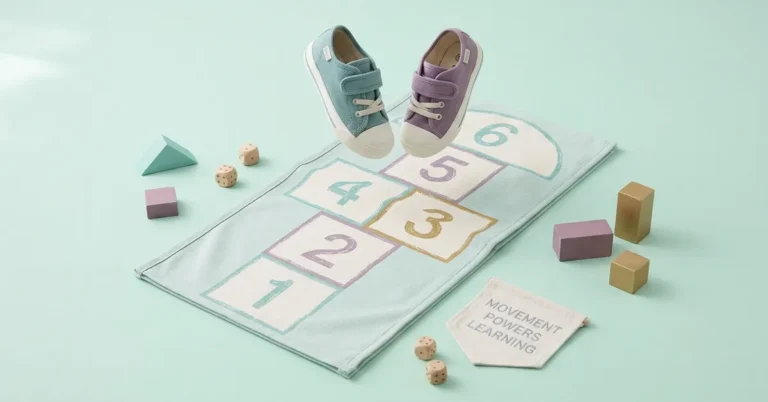
- Times-table hopscotch. A hopscotch grid with products — call “4 × 3” and they hop to 12. Multiplication drills disguised as recess. (Ages 8–10.)
- Kitchen fractions. Halve a recipe together; measure, pour, and cut. Fractions become something you can taste. (Ages 6–10.)
Reading & spelling
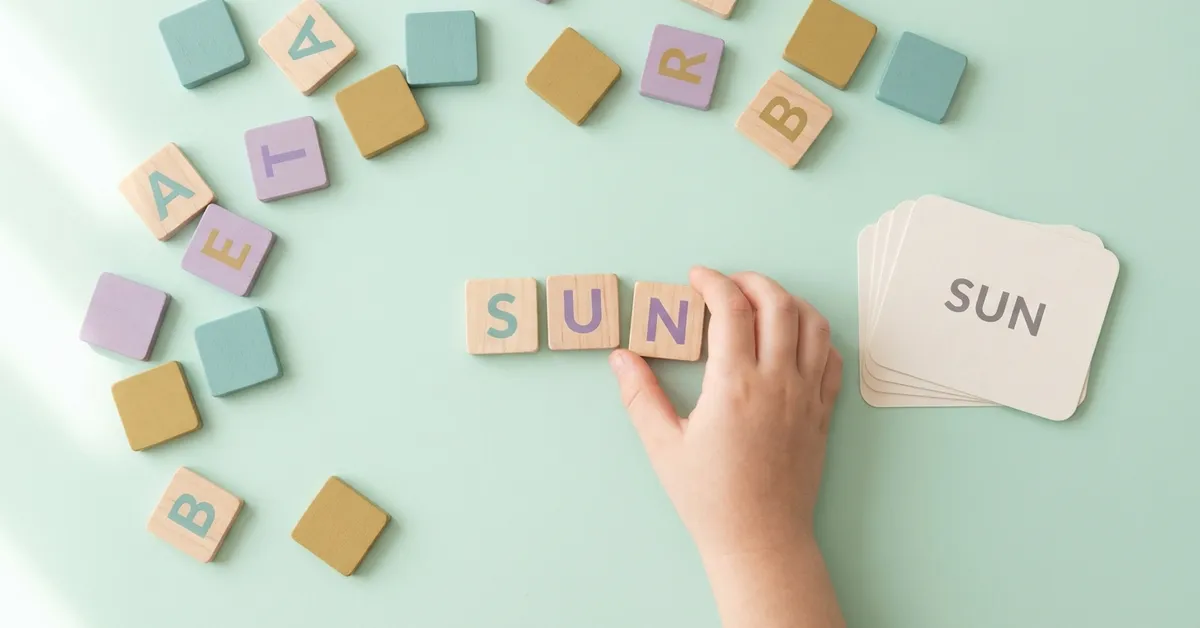
- Air writing. Trace letters or spelling words in the air with big arm movements — the bigger, the better. (Ages 4–8.)
- Letter body shapes. Form letters with arms, legs, or the whole body; spell short words as a team. (Ages 4–7.)
- Word jumps. Spread word cards on the floor; read a word aloud, your child jumps on it. Sight-word practice with motion. (Ages 5–7.)
Patterns, logic & memory
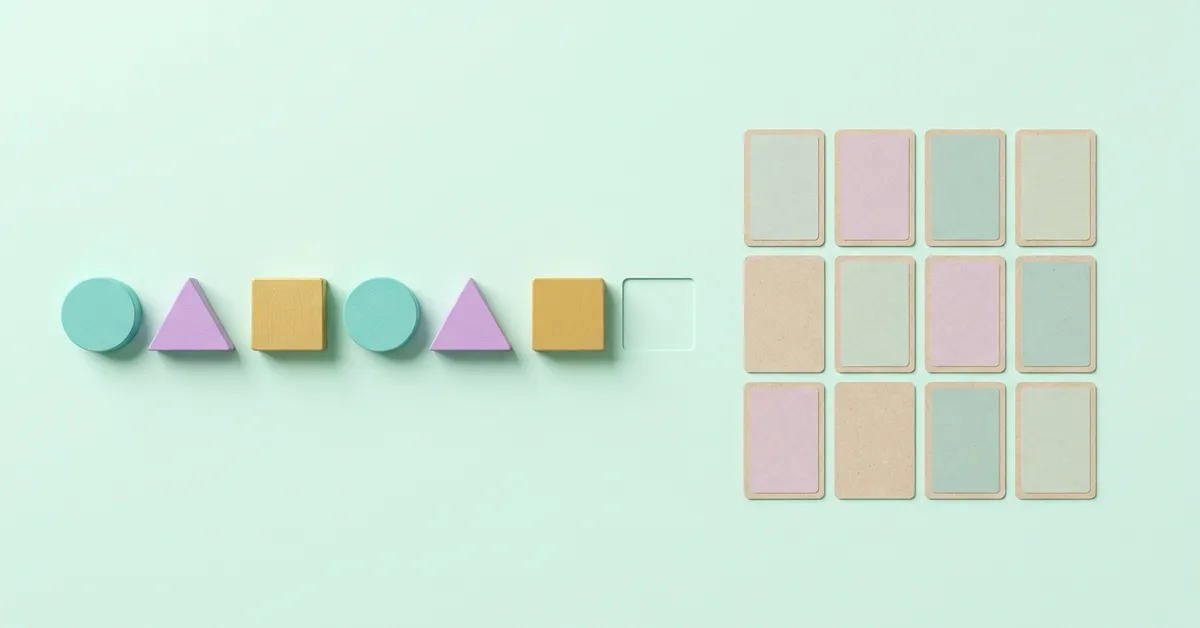
- Movement patterns. Clap-stomp-clap-stomp… your child continues the sequence, then invents one for you. Early pattern logic — the foundation of math thinking. (Ages 3–6.)
- Simon Says, learning edition. “Simon says touch something that’s a triangle.” Shapes, colors, numbers — all in one game. (Ages 3–6.)
- Act out the story. After reading, re-enact the plot together. Comprehension through performance. (Ages 4–8.)
Digital — done the active way
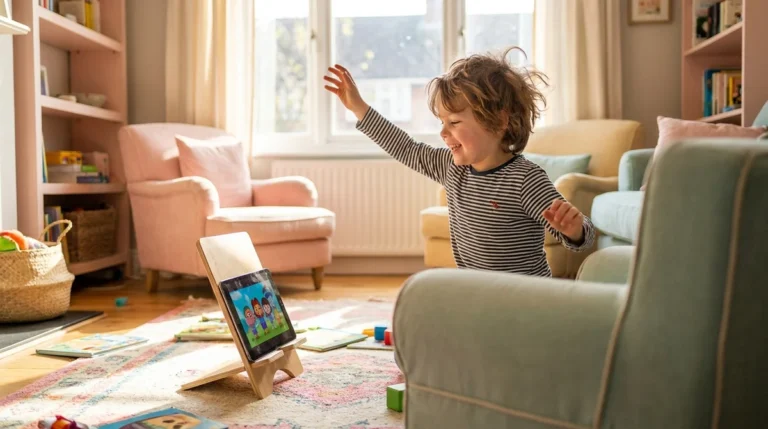
- Hoppy Math. All the activities above share one idea: the body joins the lesson. Hoppy Math brings that idea to the screen — your child solves curriculum-aligned math problems by jumping and moving, while the device camera reads their motion. No sensors, no wearables, and the camera feed never leaves the device. It adapts to your child’s pace, so the challenge always fits. Screen time becomes the most active part of the day instead of the most passive. (Ages 5–10.)
Tips to make any activity work better
- Keep bursts short. 10–15 active minutes beat one long session.
- Let them teach you. Asking your child to explain the game doubles the learning.
- Praise effort, not speed. “You kept going” builds more than “you’re fast.”
- Rotate, don’t repeat. Two or three activities in rotation stay fresh for months.
Not sure which activities suit your child’s age? Our guide to kinesthetic learning for kids breaks the early years down, and kinesthetic learning style helps you confirm movement really is your child’s main channel.
Frequently Asked Questions
How often should we do kinesthetic activities?
Short and regular wins: 10–20 minutes most days beats a single long weekend session. Consistency builds the habit and the skill.
Do these activities replace school practice?
No — they reinforce it. Movement-based practice strengthens the same skills school teaches, while protecting your child’s confidence and enjoyment.
My child has endless energy. Will this really help them focus?
Usually, yes. Energy that fights a still lesson can fuel an active one. Many parents find their “restless” child focuses longest when movement is part of the task.
What if I only have 10 minutes?
Pick one: jump-and-count, dice race, or a Hoppy Math session. Ten active minutes is genuinely enough to matter.
Start with one today
Don’t build a program — just pick the activity that made you smile while reading and try it after dinner. Kinesthetic learning activities work because they feel like play; keep that feeling and the learning follows.
For the days you reach for a screen, make it an active one: download Hoppy Math and let your child jump their way through math practice.