Kinesthetic Learning for Kids: A Parent’s Age-by-Age Guide
Children are born kinesthetic. Before they can read a word or follow a lecture, they learn everything — gravity, cause and effect, language itself — by grabbing, dropping, climbing, and doing. Kinesthetic learning for kids isn’t a special method; it’s the original one. The question for parents is how to keep that powerful channel open as school, screens, and worksheets push children toward sitting still.
This guide walks through what kinesthetic learning looks like at each age from 3 to 10, and how to support it without adding pressure.
Why movement matters more for kids than adults
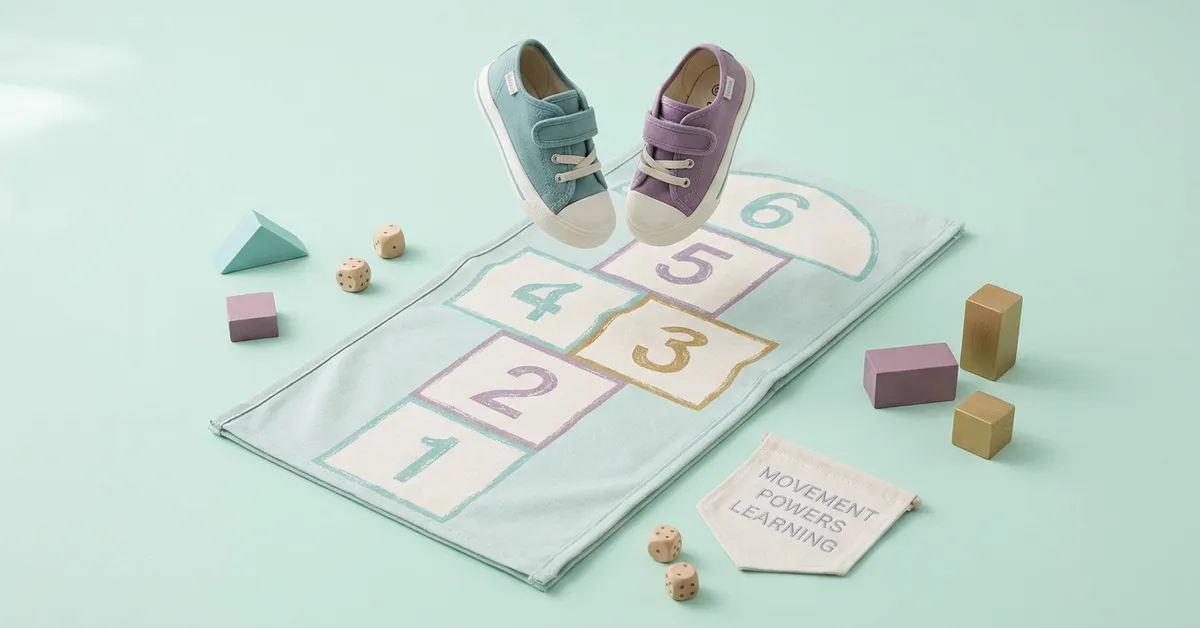
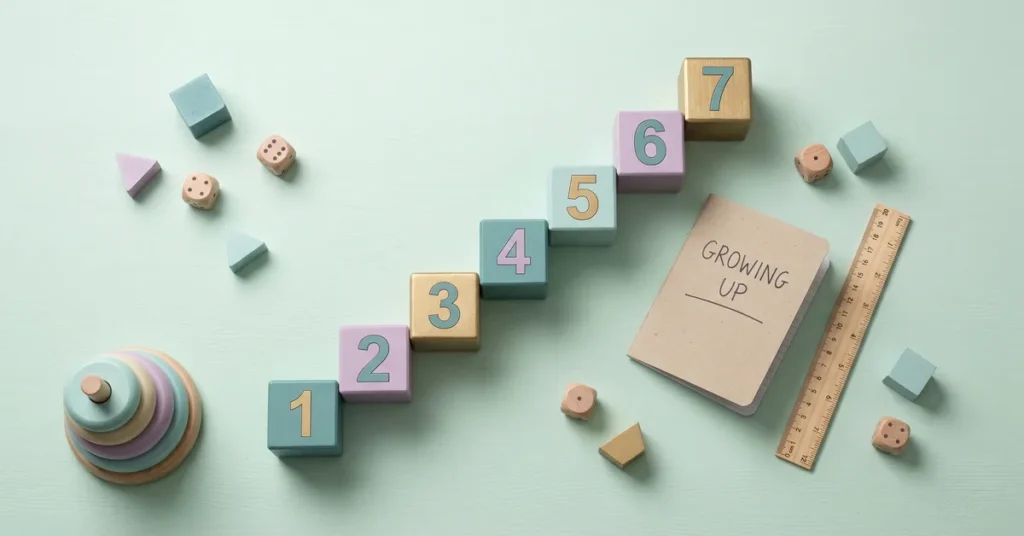
Young children think with their bodies. Abstract ideas — numbers, letters, time — only become real to them when connected to something physical. That’s why a four-year-old can’t grasp “three” as a symbol but instantly understands three jumps, three blocks, or three crackers. Movement isn’t a break from a child’s learning; it is the learning. For the full background, see our main guide to kinesthetic learning.
The cost of ignoring this is real: a naturally kinesthetic child forced into stillness-only learning often gets labeled “easily distracted” — when the actual mismatch is in the method, not the child.
Ages 3–5: learning through play and the senses
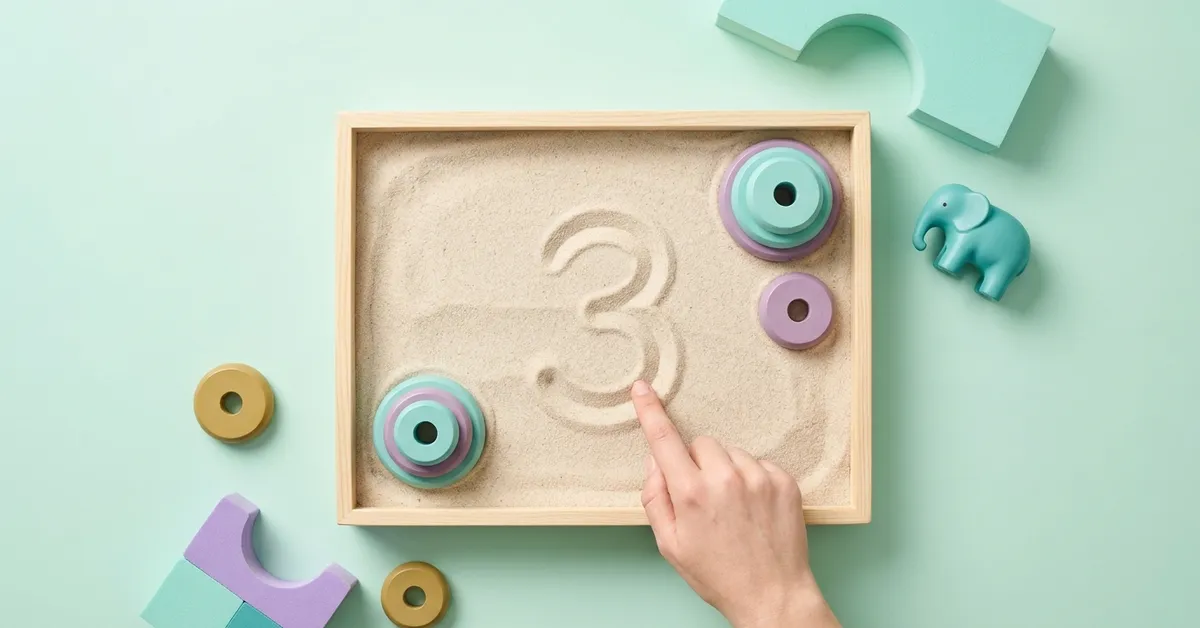
At this age, everything should be hands-on.
- What it looks like: counting steps on the stairs, sorting toys by color, building towers, pouring water between cups, dancing to pattern songs.
- What to do: narrate the math and language hidden in play (“you have two cars and found one more — now three!”); offer materials to stack, pour, and sort; keep “lessons” under ten minutes and full of motion.
- What to avoid: worksheets and drilling. The goal at this age is loving numbers and words, not performing them.
Ages 5–7: making school skills physical
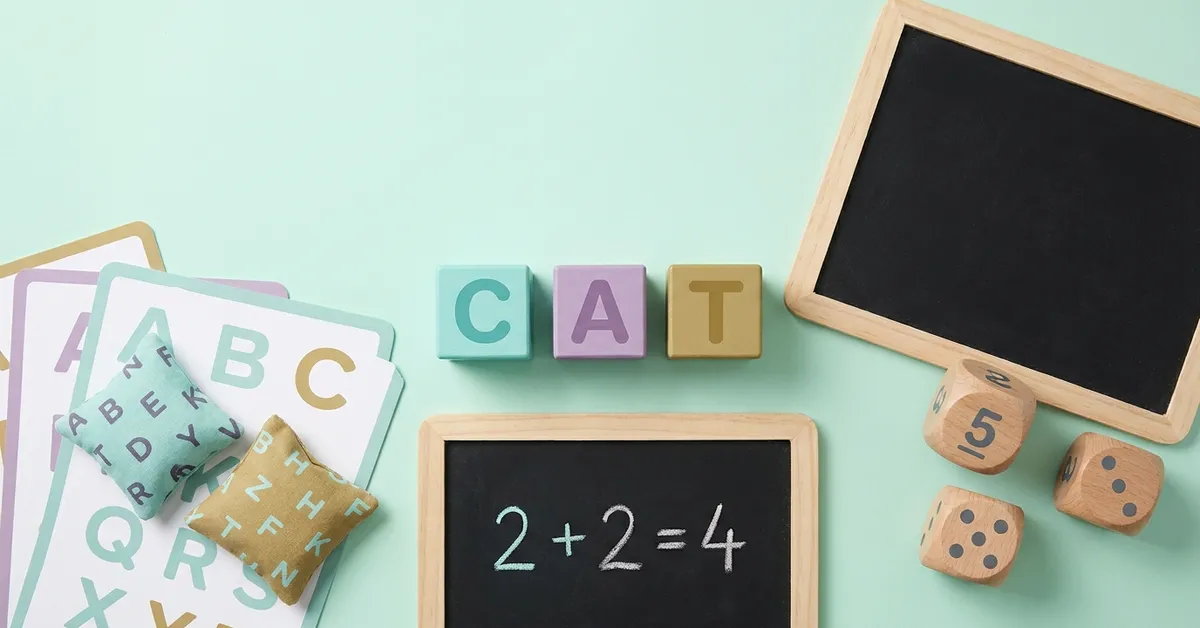
School begins, and with it the first abstract demands: reading, writing, adding.
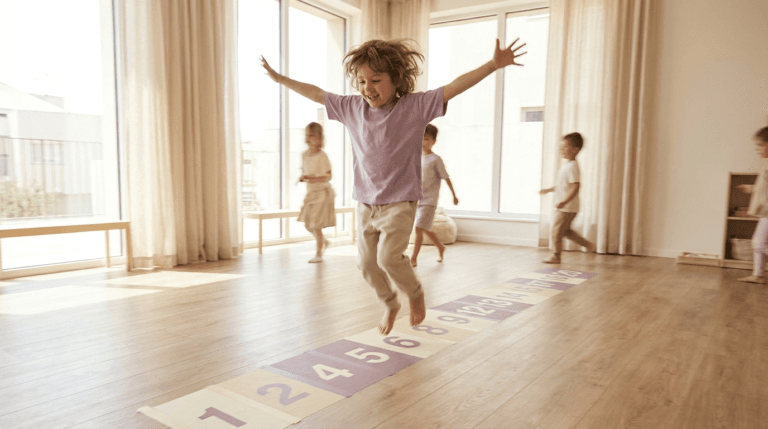
- What it looks like: a child who reads better while walking around the room, learns spelling by air-writing, and masters addition on a taped floor number line.
- What to do: convert school practice into movement — jump-and-count, word jumps, dice races. Keep sessions short and end on a win.
- What to avoid: treating wiggling as misbehavior. For many kids this age, motion is the price of focus — and it’s a fair price.
Ages 7–10: keeping the body in the game
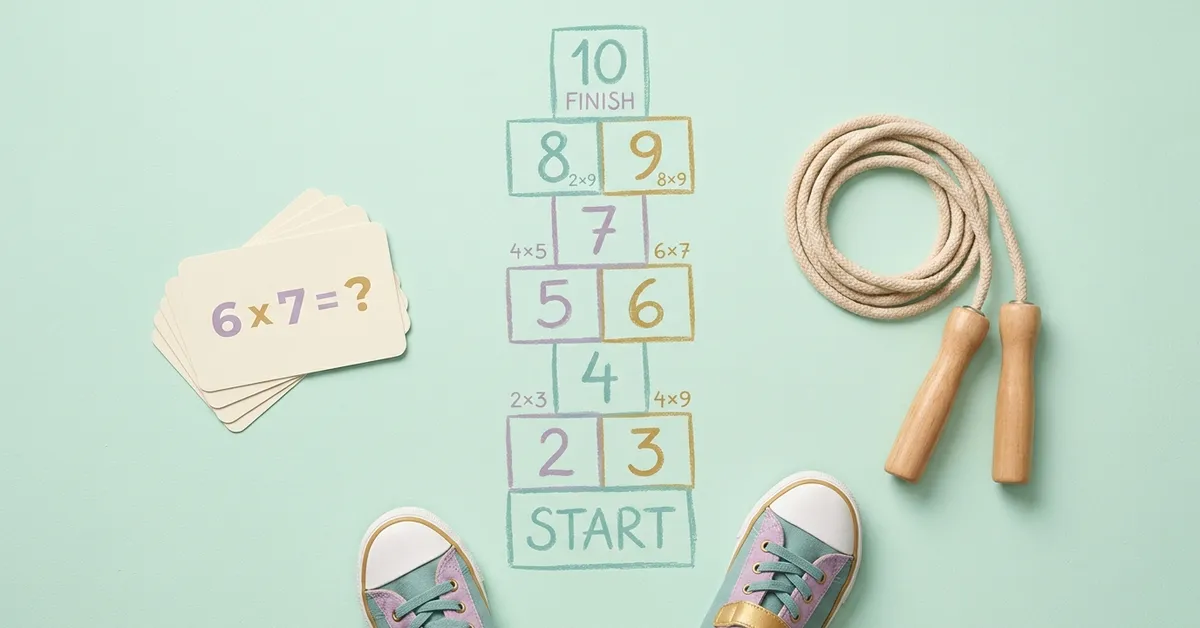
As schoolwork gets more abstract (times tables, multi-step problems), kinesthetic kids face the biggest mismatch — and the biggest payoff if you bridge it.
- What it looks like: a child who “hates math” on paper but happily races to slap the right answer on the wall; one who remembers every science experiment but no textbook page.
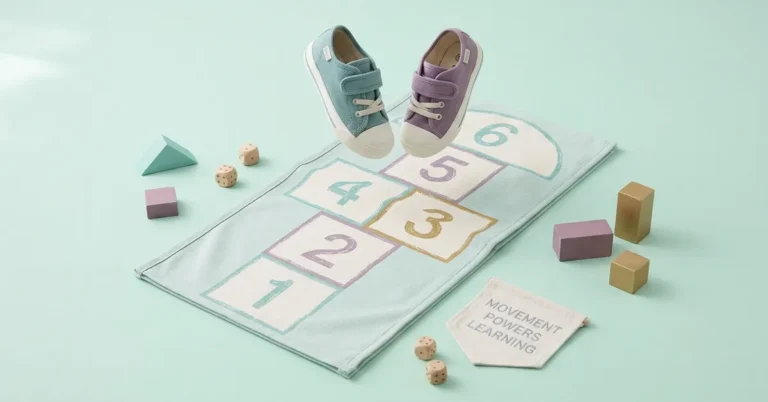
- What to do: keep physical practice alive even as content matures — times-table hopscotch, answer dashes, building projects, cooking math. Let them stand, pace, and gesture while doing homework.
- What to avoid: assuming they’ve “outgrown” movement. The need doesn’t disappear; it just gets ignored.
For a ready-made list of games by skill, see our kinesthetic learning activities, and to confirm movement is your child’s leading channel, check the signs in kinesthetic learning style.
Screens and kinesthetic kids: the active-vs-passive rule
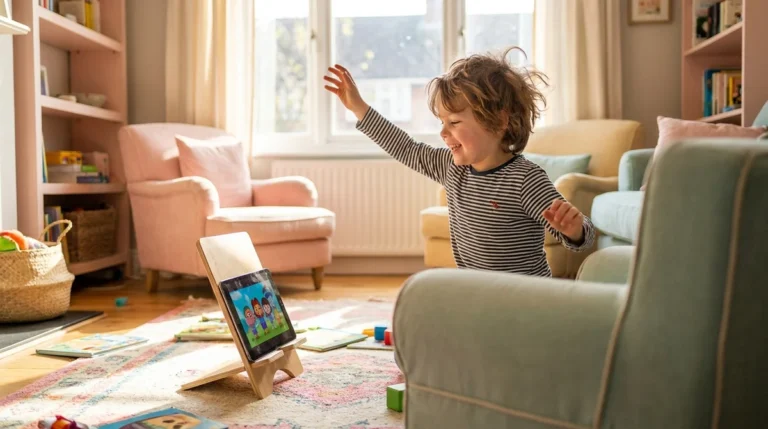
Screens aren’t automatically the enemy of kinesthetic learning — passive screens are. A child slumped and tapping is in the least kinesthetic state possible. But a screen that gets a child moving flips the equation entirely.
That’s the principle behind Hoppy Math from Active Minds: a math game for ages 5–10 where children answer by jumping, reaching, and moving — the device’s camera reads their motion, with no sensors or wearables, and the camera feed never leaves the device. Content follows the school curriculum and adapts to your child’s pace. For a kinesthetic kid, it turns the screen from the stillest part of the day into the most active one.
A simple weekly rhythm for parents
You don’t need a curriculum — just a rhythm:
- Daily (10 min): one movement game tied to a school skill (counting jumps, word jumps, dice race).
- A few times a week: one hands-on project — cooking, building, measuring, taking something apart.
- When screens happen: prefer active over passive. One Hoppy Math session beats an hour of watching.
- Always: praise the trying, not just the result. “You didn’t give up” is the sentence that builds learners.
Frequently Asked Questions
At what age does kinesthetic learning start?
From birth — it’s how all young children learn. The parenting task isn’t to create it but to keep it welcome as school makes learning more abstract.
Is my child kinesthetic or just energetic?
Often both, and they overlap. The clue is what happens when movement joins the lesson: if focus and memory jump noticeably, you’re looking at a kinesthetic learner, not just an active kid.
Will my child outgrow the need for movement?
The intensity usually softens with age, but the benefit rarely vanishes. Even older kids (and adults) retain more from hands-on practice.
How much active screen time is okay?
Quality beats quantity: short, active, curriculum-aligned sessions are far more valuable than long passive ones. Watch your child’s energy and mood — active screen time should leave them brighter, not drained.
Let them move — that’s the method
Kinesthetic learning for kids is really just respecting how children already work. Keep the body in the lesson and you protect the two things that matter most: real understanding and the love of learning.
Want the easiest place to start? Download Hoppy Math and let your child’s next math practice be a jumping game.